Common Termite Myths & How Termite-Proof Plywood Solves Them

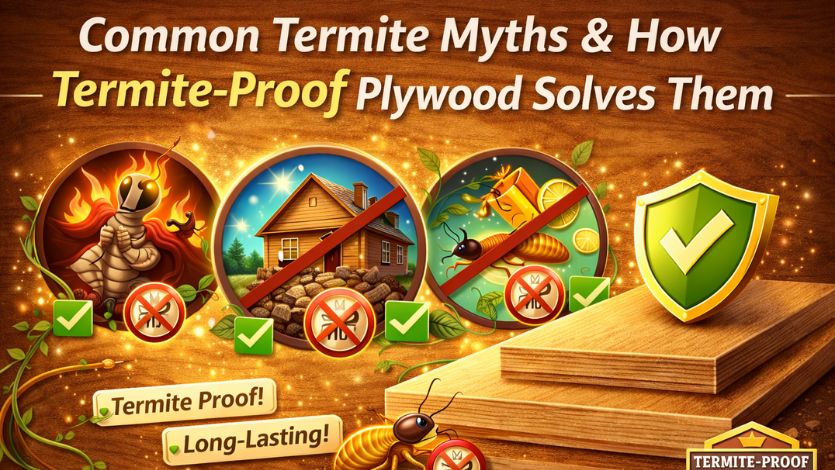
Termites are silent destructors. They make no announcement of their arrival, and by the time obvious harm shows, the cost is already considerable. Despite the danger, there is widespread misunderstanding regarding termites, their behavior, and how construction materials react to them. Much of the uncertainty stems from falsehoods that continue to exist in the building and interior design industries.
We feel it is time to differentiate truth from fabrication. In this post, we'll debunk the most frequent termite myths and show how termite-proof plywood is a realistic, long-term solution. This isn't a theory. This is about material performance, structural integrity, and protecting valuable investments.
Understanding the true threat of termites
Termites feed on cellulose, wood is an easy target. Termite infestations are not uncommon in India's environment, which provides perfect breeding conditions due to humidity and warmth. These are common dangers.
The true issue is not the termite itself. The issue stems from poor material choices paired with disinformation. When low-quality plywood is utilized, termites can wreak damage in days rather than years. They require months.
This is when termite resistant plywood enters the picture
Myth 1: Termites only attack older or poorly maintained buildings.
This is one of the most destructive beliefs. Termites have little regard for the age of a structure. They are concerned about their access to food and water.
New dwellings are frequently more vulnerable because of:
- Fresh wood contains a higher cellulose content.
- Construction detritus draws colonies.
- Chemical soil treatments wear away over time.
Using termite-resistant plywood during construction prevents termites from infiltrating the material before any damage occurs.
Myth 2: Surface Polishes and Paints Can Stop Termites
Paints, laminates, and surface finishes only provide protection for what they cover. Termites strike from within. They infiltrate through seams, edges, and buried locations that surface coatings cannot reach.
What this truly signifies is quite straightforward. The cosmetic protection fails. Structural protection projects.
During the manufacturing process, high-quality termite-proof plywood is treated to ensure homogeneous chemical penetration throughout the board. Internal resistance is what prevents infestations from starting.
Myth 3: All plywood is naturally termite-resistant
This is just inaccurate.
Standard plywood has no intrinsic termite resistance. Unless the plywood is chemically treated and approved, it will remain fragile. Because plywood appears to be identical, many customers believe it is all the same. That assumption results in pricey repairs.
Termite proof plywood is made with particular preservatives that render the wood unpleasant to termites. This is not a coat. It is a foundational defence.
Myth 4: Termite-resistant materials are prohibitively expensive
This fallacy ignores lifecycle costs.
Standard plywood may be less expensive initially, but replacement, repair, and reinstallation costs mount up quickly after termite’s strike. When you factor in labor, delay, and interruption, the "cheap" choice becomes more expensive.
Termite-resistant plywood is an investment in durability. It lowers maintenance expenses, increases furniture life, and protects property value over time.
How Termite-Proof Plywood Works
The production method is what determines the performance of termite-proof plywood. Advanced preservatives are used to cure wood veneers, penetrating deep into the fibers. The following preservatives:
- Repel termites
- Prevent fungal growth
- Improve overall durability.
This treatment does not wash off. It is active for years, even in high-moisture conditions.
We regard this as proactive protection, not damage control.
Where Termite-Proof Plywood Makes a Big Difference
Some applications are more susceptible than others. Using termite-proof plywood in these places considerably minimizes the long-term risk.
- Kitchen cabinets exposed to moisture.
- Wardrobes and storage units
- Doors and their frames
- Modular furniture.
- Wall paneling and dividers.
These are the first areas that termites target. Reinforcing them with the appropriate material changes the outcome.
Why plywood quality is more important than ever
Engineered wood plays an important role in modern interior design. As designs become more complicated, the number of hidden areas increases. Termites find these areas excellent for hiding.
Infestation spreads faster when using low-grade plywood. It is protected by high-quality termite-resistant plywood.
Quality plywood ensures:
- The structural strength
- Dimensional stability.
- Resistance to pests and humidity
This combination is necessary for long-term performance.
Long-Term Impact on Property Value
Termite damage is more than simply a routine maintenance concern. It's a valuation issue. Visible termite damage reduces resale value and raises inspection flags.
Using termite resistant plywood protects more than just furnishings. It ensures credibility, safety, and asset value.
Buyers are conscious of quality. Inspectors document material selections. Trust is built on the foundation of durability.
Last Thoughts: Build Once, Build Right
Termite myths exist because damage is undetectable until it is severe. By that point, replacement seems unavoidable. We believe that prevention is the only sensible strategy. Choosing termite-proof plywood eliminates uncertainty from building and interior projects. It provides piece of mind, structural integrity, and long-term savings.
GMG Plywood is your go-to source for dependable, high-performance plywood solutions that preserve your investment. Invest in materials that work just as hard as you do.